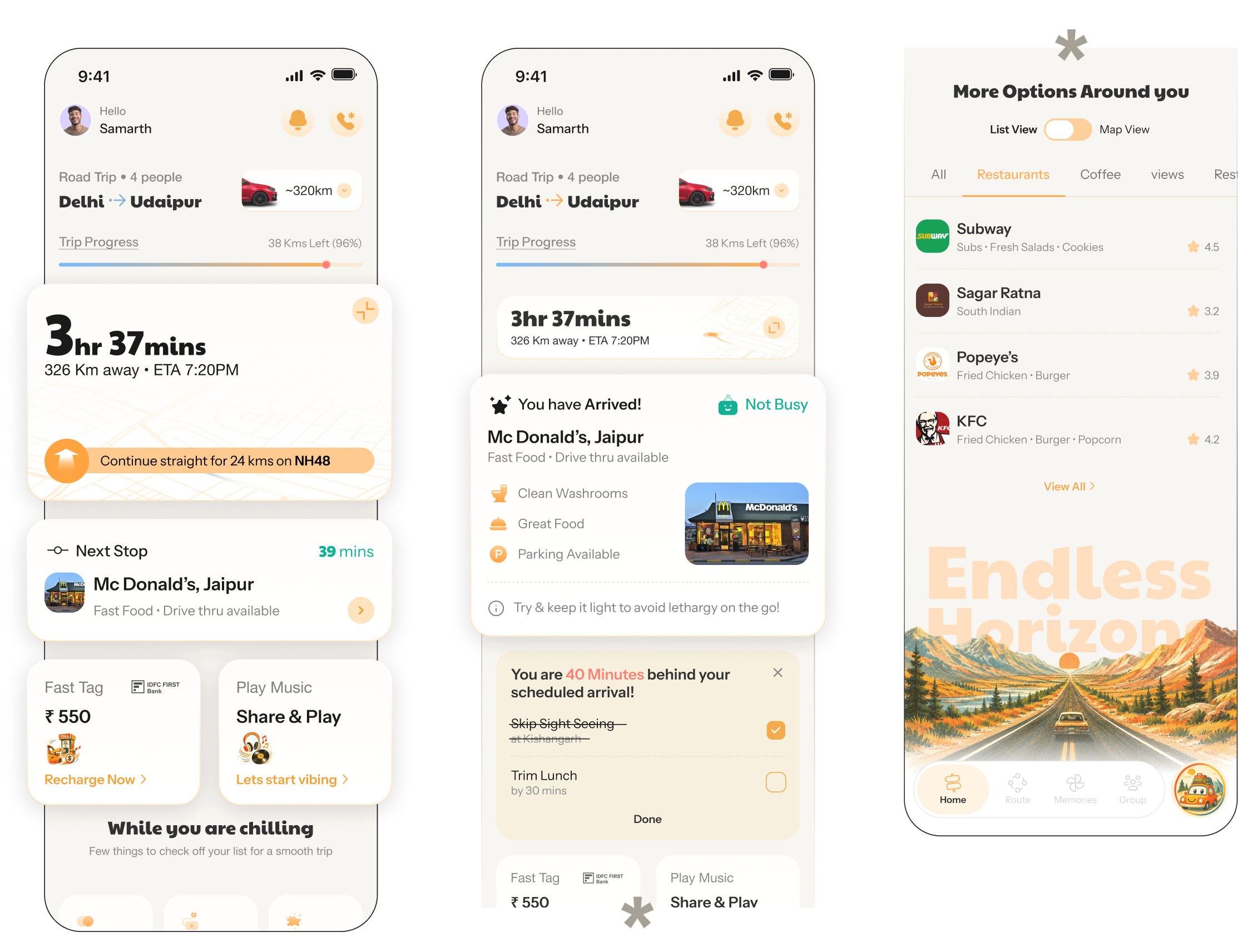
A co-pilot tool wins by being glanceable, not by doing everything. One app that reads context on two axes: your posture (moving or stopped) and your phase (start, middle, arrival).
Role
UX Designer
Type
Design Exercise
Timeline
1 Week Sprint
Platform
iOS
01
The Problem
Road trips are fun, but the person in the front seat is juggling too much with no real tool to help.
Information at the wrong time
At 100 km/h you need a 2-second glance. At a chai stop the whole group gathers round one phone. One density doesn't fit both.
Plans that fall apart
Detours, delays, spontaneous stops, a trip is a living plan. But nothing helps you adapt on the fly without re-routing from scratch.
No one's watching the driver
Long highways, late-night stretches, fatigue creeps in. There's no system to flag lethargy, swap drivers, or even track who's been behind the wheel too long.
Fuel anxiety is real
How far can we go? Should we stop now or push to the next town? Without vehicle-aware data, every fuel decision is a guess.
Group coordination is scattered
Texts, calls, Maps, notes, the co-pilot bounces between five apps to keep everyone aligned on route, stops, and timing.
Phases get ignored
The first 30 minutes of a trip feel different from hour 4. Arrival is its own moment. Yet every app treats the entire journey as one flat state.
02
Why a Co-Pilot?
The driver already has Google Maps. The back seat is along for the ride. The front-seat passenger is the underserved user.
The Driver
Eyes on the road. Already has Maps for navigation. Not our user, they need less, not more.
The Co-Pilot
Juggles route, stops, fuel, food, group comms, the person who makes the trip actually work. Our user.
A co-pilot tool wins by being glanceable, not by doing everything. The app needs to read two types of context:
Posture, moving or stopped?
Phase, start, middle, or arrival?
03
Who I designed for
The Front Seat Co-Pilot
Juggles everything that isn't driving, route, stops, fuel, food, keeping the group informed.
Acts on behalf of the whole car. Their wins are the group's wins.
The Back Seat is Informed, occasionally consulted, Driver is not our user and needs no attention
04
The Core Insight
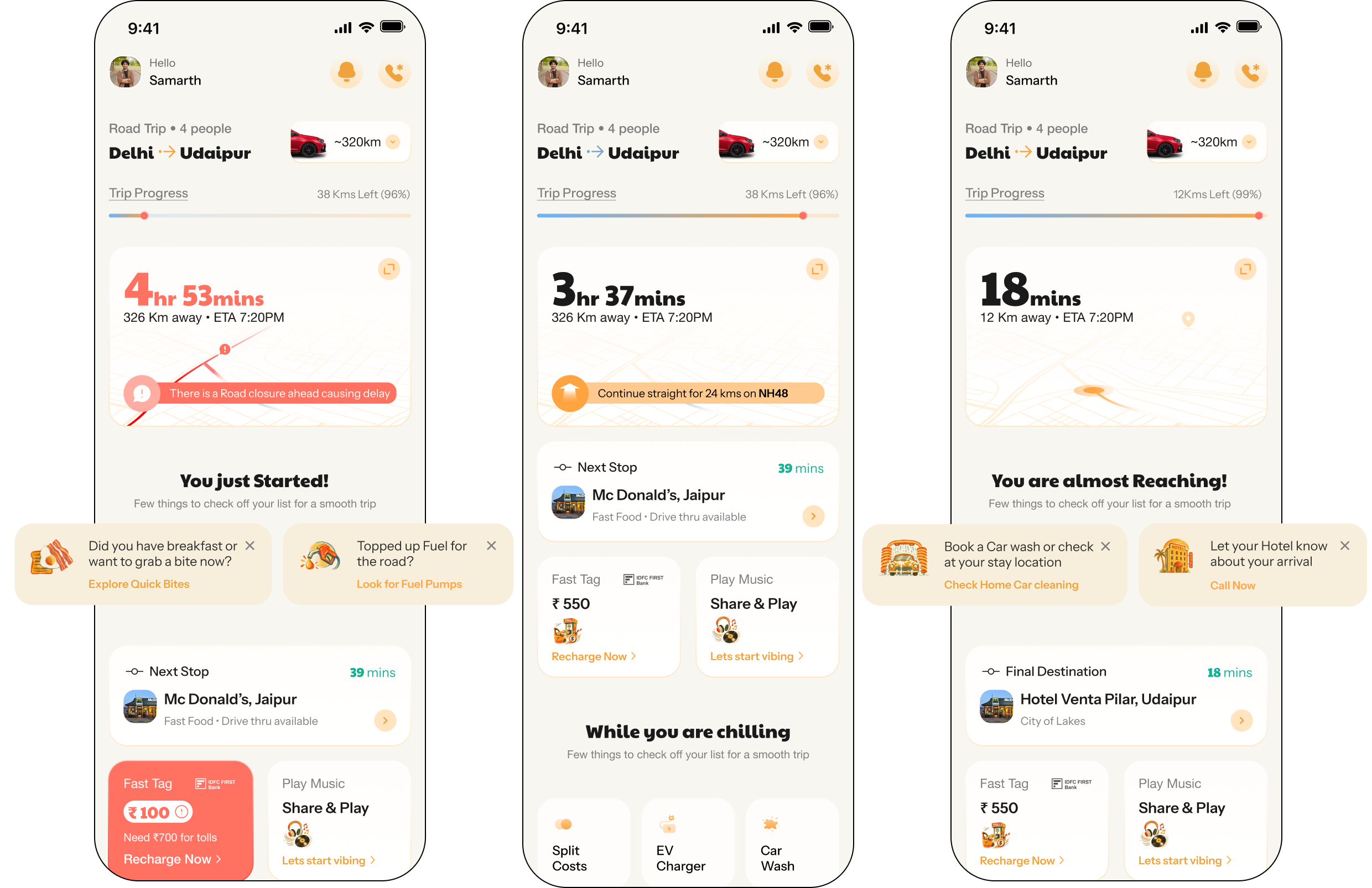
One app that reads context on two axes
Axis 1 : Posture
In Motion ⇄ At a Stop
Changes minute to minute. Controls information density and interaction cost, a 2-second glance vs. the group gathered round.
Axis 2 : Phase
Start → Middle → Arrival
Changes across the whole trip. Controls which contextual card surfaces, and retires it once the moment passes.
Constant core (trip · fuel · progress) + posture sets density + phase sets the moment.
05
How it plays out
In Motion
Solo, Single Handed, Eyes up
The big ETA bringing focus to "how long before we reach?" questions
Minimal Colors, Maximum clarity
Calm for the day, keeping it easy on the eyes
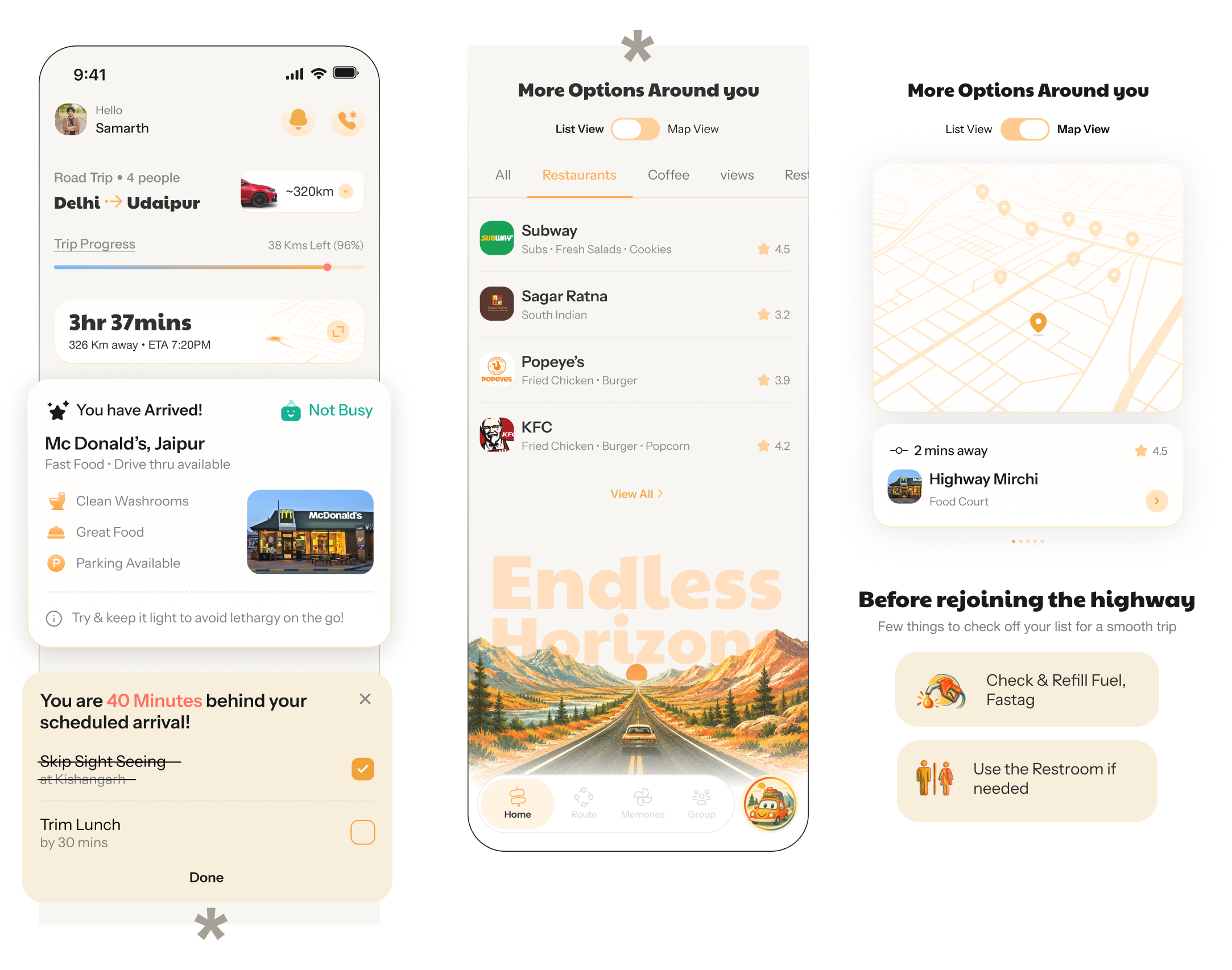
At a Stop
The group decides together on one phone
To do things on the screen
Clarity on the purpose of that break/stop
Reminders to ensure basics aren't forgotten in all the fun of a road trip
The system shifts to provide contextual data
06
What I chose to build
Where we are (ETA)
Progress, time to next stop & to destination. The orient-me job.
Next stop & What to Expect
Peek in motion; full detail, facilities, vibe, at a stop.
Fueling Intelligence
Vehicle data input to provide suggestions on refuelling, range etc.
Handling Deviations and where in the trip you are
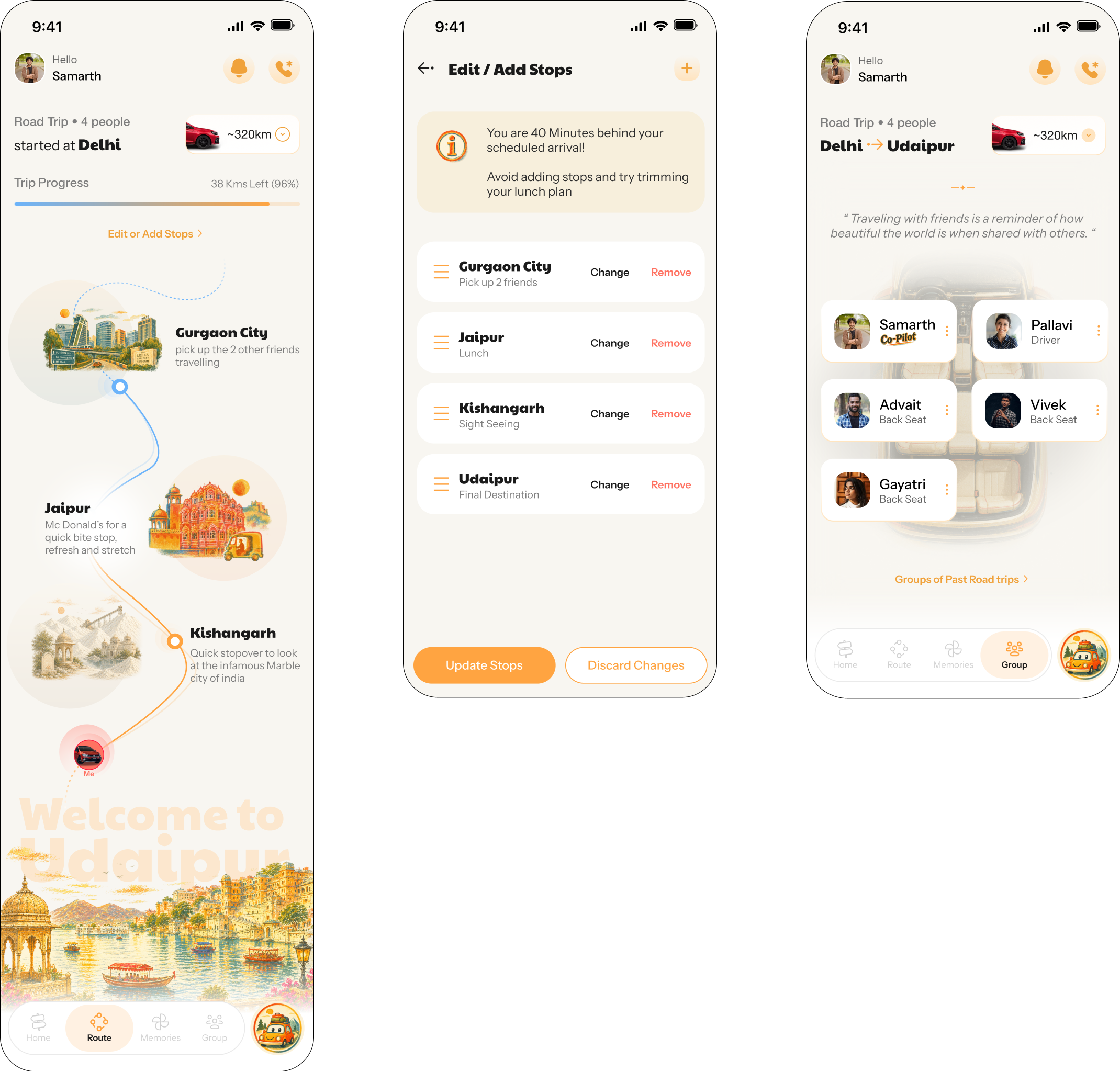
Running late → skip, trim, or add on the fly. A trip is a living plan. Adapt to spontaneous changes of plan because of external factors.
FastTag Tolls, Routes
Balance + toll forecast. Immersive view of route for zero confusion.
AI Assistant & Road Trip Phases
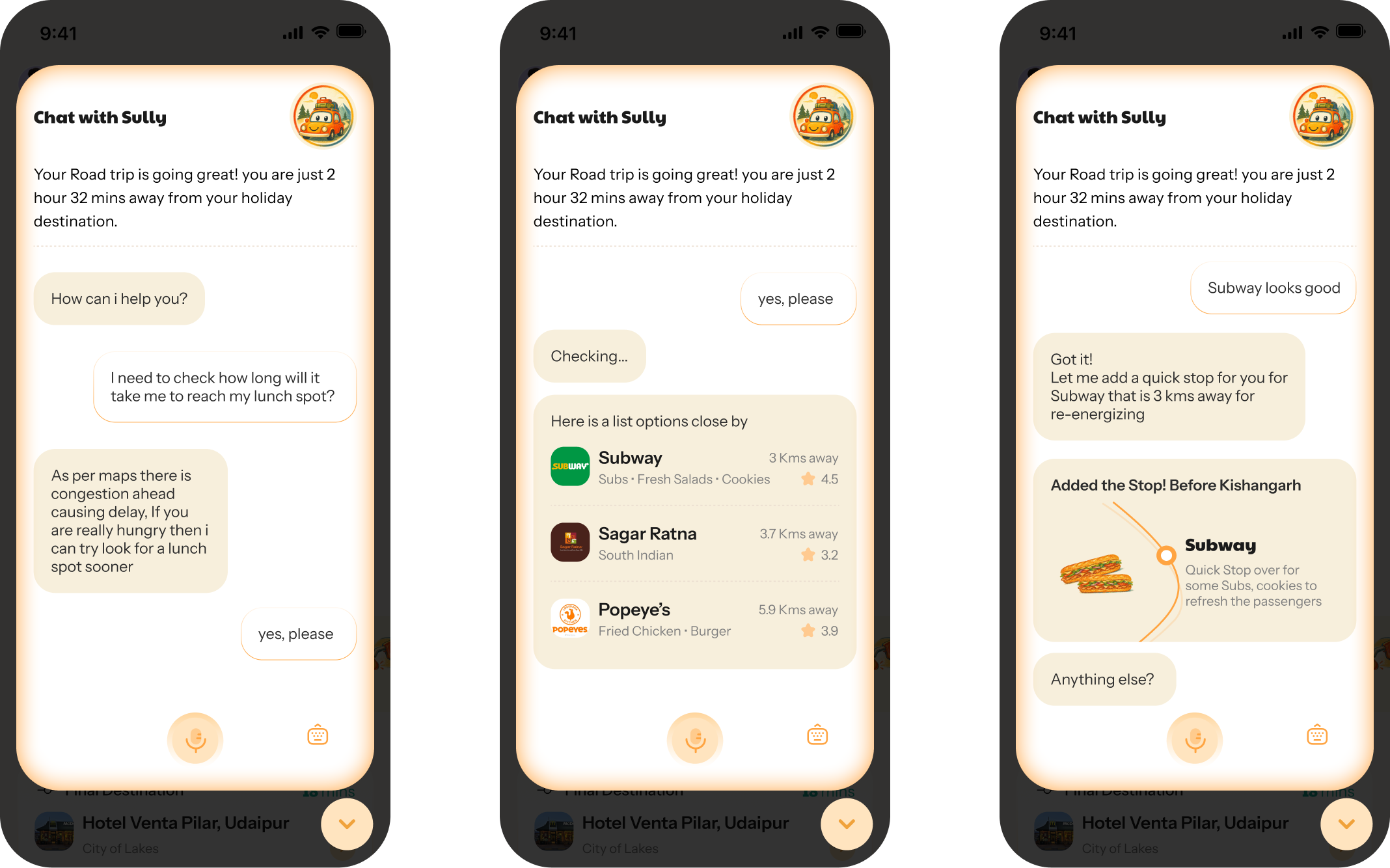
Group enjoys music, chatting and everything. Similarly, talk to AI rather than typing, brings better & easy conscious to the co-pilot app. Making sure app understands the needs basis duration into the trip.
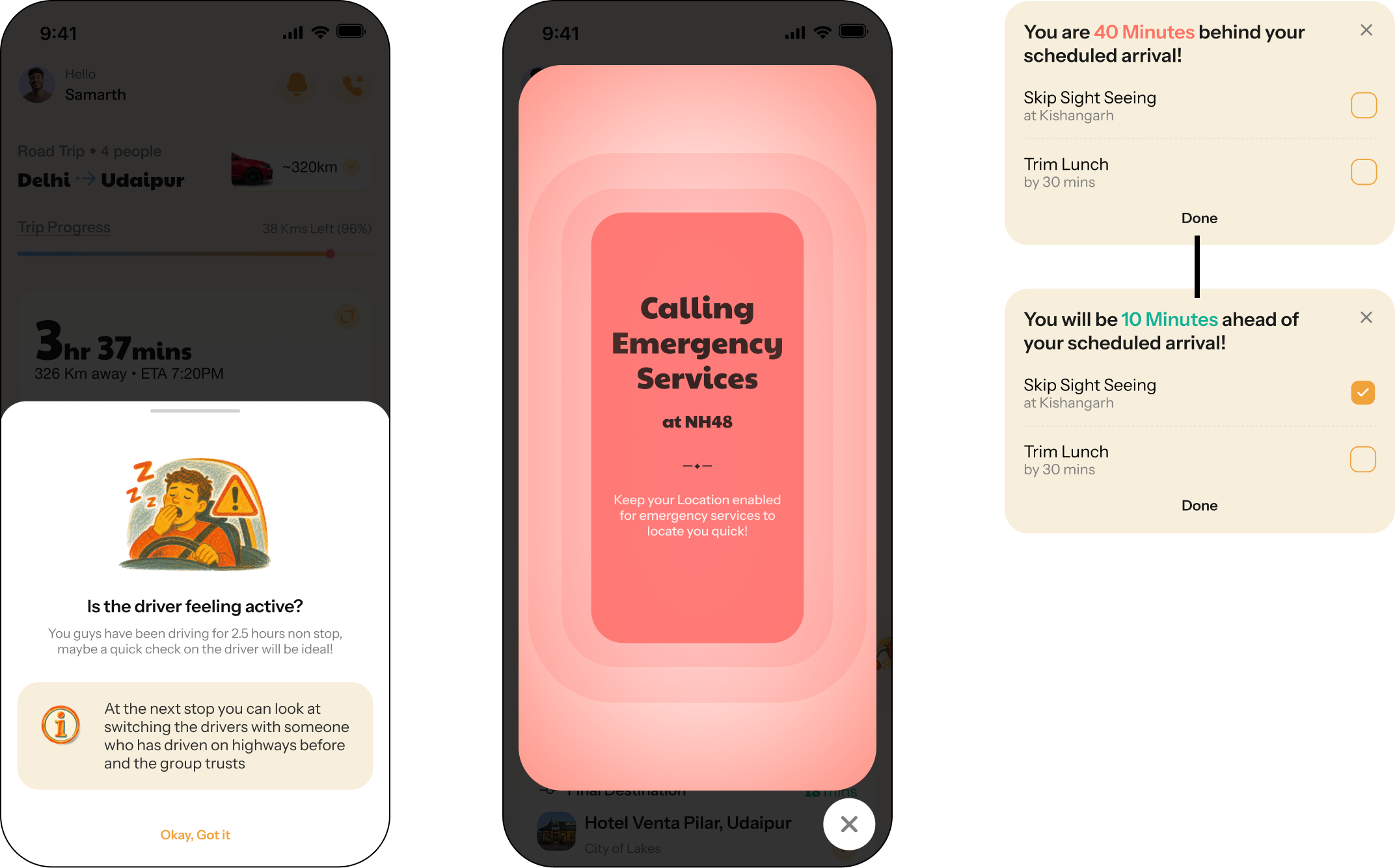
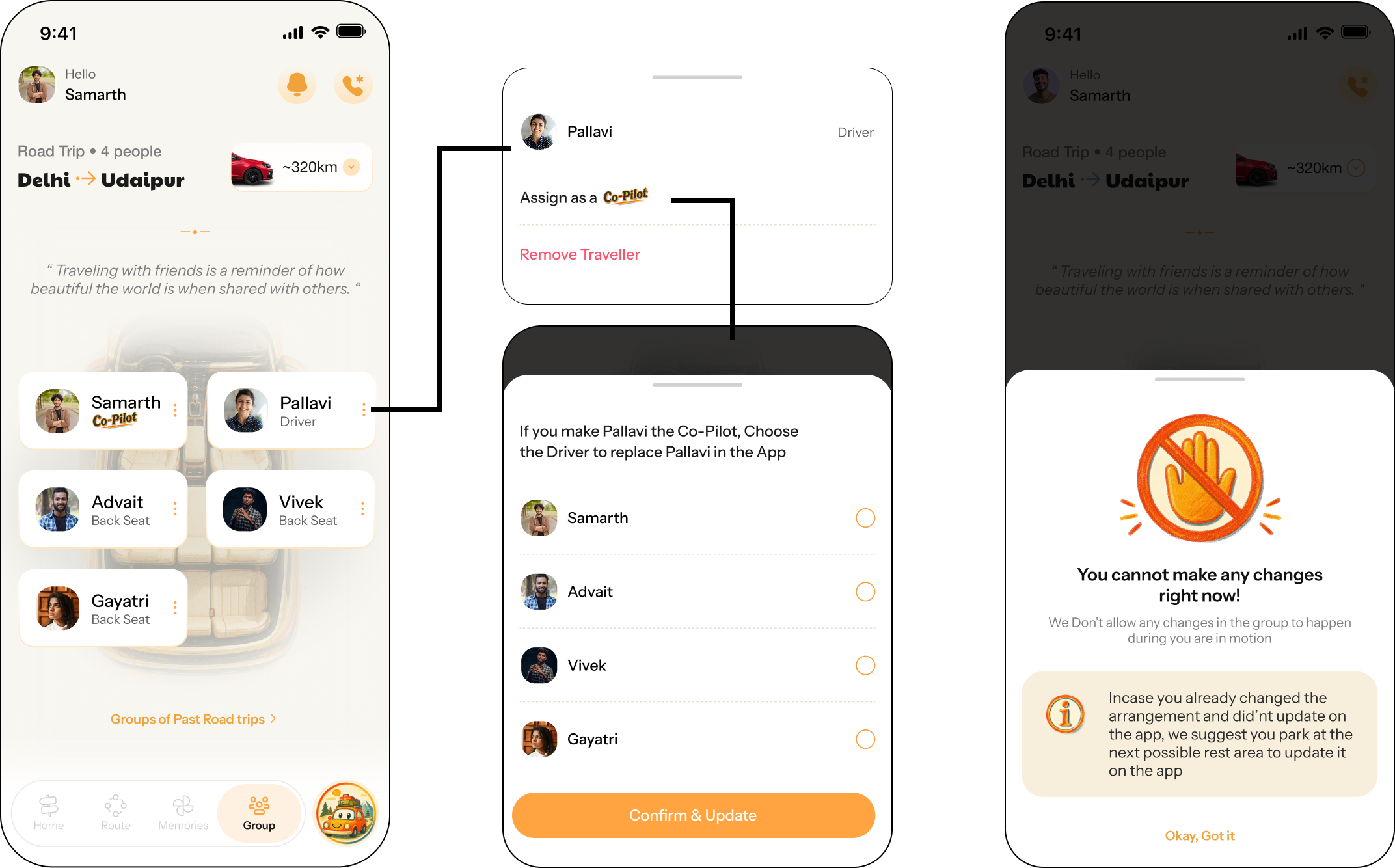
Driver Assigning & Lethargy
Manage who's driving, swap roles at stops, and monitor driver fatigue with timely alerts.
07
What I left out
Multi Car Convoy
The brief scopes to one car. Convoy is a bigger, different problem, cross-vehicle coordination, not co-piloting.
Full Turn-by-turn Navigation
The driver already has Maps. We win by being glanceable, not by becoming competitors to Google.
Post Trip Recaps & Bookings
The brief says design during the trip. Arrival nudges stay as a deliberate edge, not a marketplace.
With focus on
Glanceability
Richness of content
Map for Reference
Map as a navigation
Phases of the Road Trip (Start, Middle, Arrive)
Treating the whole at single level
08
The Co-Pilot App, Sully
Axis 1 : Posture
In Motion ⇄ At a Stop
Axis 1 : Posture, Expanded
Just Stopped & After a While
Axis 2 : Phase
Start → Middle → Arrival
Defined Route & Traveller Group
The AI itself, Sully!
Driver Lethargy, SOS & Contextual Cards
09
Group Assigning & Cautions
Group Assigning & Cautions to follow
The co-pilot's job is to make the journey smoother, quietly.
Glanceable in motion. Open at a stop. One product, two scales of context.